
Why Eating Curd at Night Can Harm Your Digestion, Sleep & Immunity – Ayurveda Explains

Why Ayurveda Advises Avoiding Curd at Night
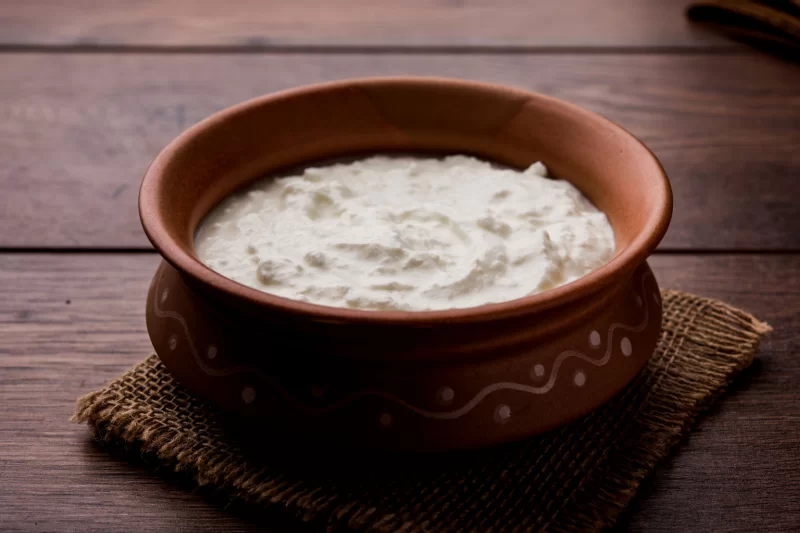
Curd (Dadhi) is a staple food in most Indian households and is widely considered healthy due to its probiotic nature. However, Ayurveda strongly advises against consuming curd at night, even for otherwise healthy individuals. This recommendation is not a myth but is rooted in Ayurveda’s deep understanding of digestion (Agni), dosha balance, and the body’s natural circadian rhythm.
Let us understand why eating curd at night can be harmful, when it is safe to consume, and how to reduce its negative effects if unavoidable.
Ayurvedic Properties of Curd (Dadhi)
According to Ayurveda, curd possesses the following qualities:
Abhishyandi – Causes blockage in body channels
Amla (Sour) – Increases Pitta and Kapha
Guru (Heavy to digest)
Kapha-vardhaka – Increases Kapha dosha
Because of these properties, curd requires strong digestive fire (Agni) for proper digestion.
Why Curd Should Be Avoided at Night
1. Weak Digestive Fire at Night
Ayurveda explains that digestive fire naturally weakens after sunset. At night, the body shifts into rest and repair mode rather than digestion. Heavy foods like curd become difficult to digest, leading to the formation of Ama (toxic undigested waste), which is the root cause of many diseases.
2. Kapha Dominance During Night Time
Night time is governed by Kapha dosha. Since curd itself is Kapha-dominant, consuming it at night leads to Kapha aggravation, resulting in:
Indigestion and bloating
Excess mucus formation
Heaviness in the chest
Sluggish metabolism
3. Increased Risk of Respiratory Problems
Due to its mucus-producing nature, regular consumption of curd at night may contribute to:
Chronic cough and cold
Sinus congestion and sinusitis
Asthma and allergies
Throat irritation
This is why Ayurveda strictly advises respiratory patients to avoid curd after sunset.
4. Disturbed Sleep Quality
Undigested curd can cause heaviness, acidity, and reflux, which may lead to restless sleep or frequent awakenings, affecting overall recovery and immunity.
Ideal Time to Consume Curd as per Ayurveda
✔ Best time to eat curd:
During daytime
Before sunset
During the day, digestive fire is strong enough to digest curd efficiently without producing toxins.
Ayurvedic Correctives to Reduce Harm of Curd
If curd consumption is unavoidable, Ayurveda recommends adding digestive correctives such as:
Jeera (Cumin powder) – Improves digestion
Black pepper – Reduces Kapha and mucus
Jaggery or sugar – Balances sourness
Amla (Gooseberry) powder – Enhances digestion
⚠️ Never consume curd plain at night.
Who Should Strictly Avoid Curd at Night
People with chronic cough or cold
Sinusitis or asthma patients
Individuals with weak digestion
Kapha-dominant body types
People prone to acidity or bloating
Ayurveda’s Golden Rule for Food Timing
Ayurveda emphasizes what you eat, how you eat, and when you eat. Even healthy foods can behave like poison if consumed at the wrong time.
Conclusion
Curd is not unhealthy by nature, but timing is crucial. According to Ayurveda, eating curd at night disturbs digestion, increases Kapha dosha, and may lead to respiratory issues, poor sleep, and toxin accumulation.
For optimal health:
✔ Consume curd only during the day✔ Avoid it after sunset✔ Use Ayurvedic correctives when needed
Following these simple Ayurvedic principles can significantly improve digestion, immunity, and overall well-being 🌿


Comments